
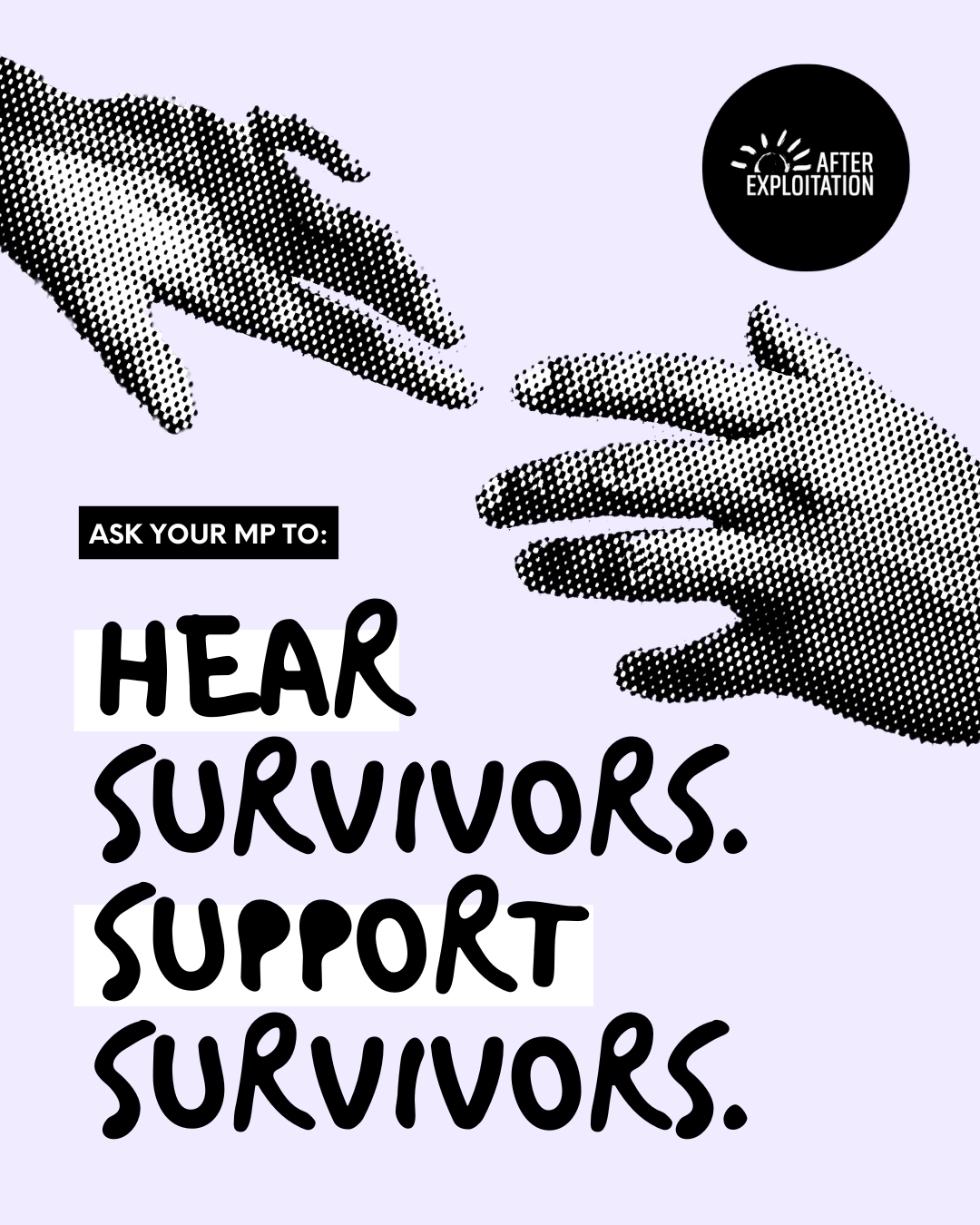
ACT NOW: Hear survivors, support survivors
In the UK, survivors of modern slavery and trafficking are met with suspicion, not support, when they come forward.
With no guarantee of safe and secure housing, mental health support or legal advice, survivors are left worrying about what will happen after fleeing exploitation.
To make matters worse, a slew of rule changes are making it even harder to be ‘recognised’ as a victim by the Home Office at all, restricting who has rights and who doesn’t.
Specialist charities and campaigners are calling for the UK to put survivor rights and support into law. Will you join us?
How survivors are detained for profit
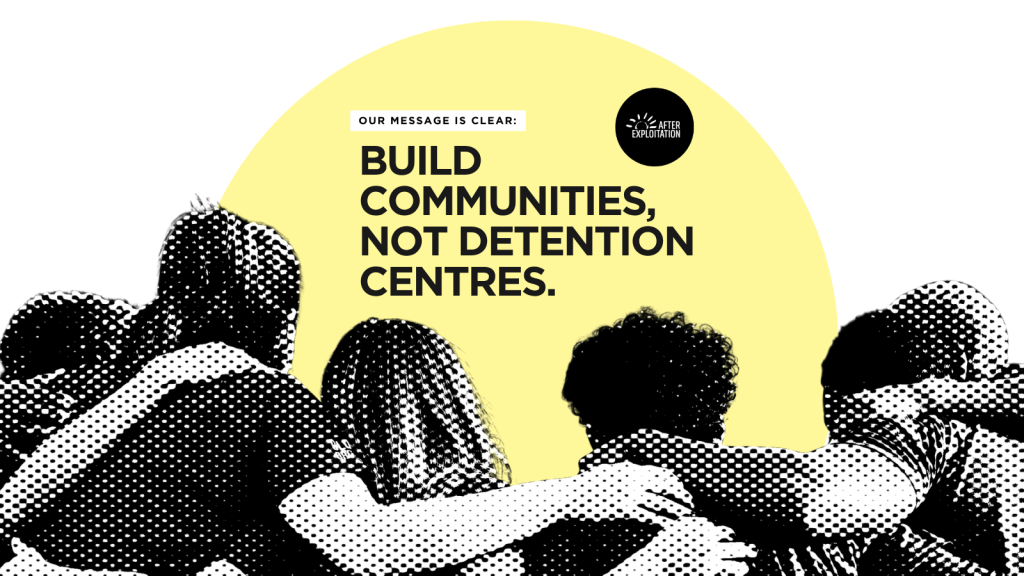
Every year, thousands of vulnerable people, including survivors of modern slavery and human trafficking, are locked up under ‘immigration powers’. In these prison-like centres, survivors are isolated from their communities, loved ones and the support they need simply because of their immigration status.
Mariam*, an After Exploitation campaigner with lived experience of trafficking and detention ,explains:
When I was detained, I felt like I was being punished for being exploited.
I was found to have psychological trauma…but they kept detaining me. The experience felt like someone was hurting me, but telling me not to cry.
Immigration detention causes lasting trauma. I still don’t keep my keys together because the sound of keys reminds me of the doors being locked in detention.

Child sexual exploitation (CSE) survivors ‘forgotten’ in toxic debate
Stereotyping victims and survivors of child sexual exploitation (CSE) not only harms communities: It prevents professionals recognising the many ways exploitation presents itself. Both victims and perpetrators can be any gender, age, ethnicity or background, and it’s vital that those in power recognise this.
Our joint letter to the major political parties on CSE, published in the Guardian, is signed by more than 70 charities, survivor-led organisations, law firms, and academics.

In the press
We support journalists in their reporting on modern slavery, and launch our own investigations on neglected issues. Read our latest comments, analysis and investigations in the press here.

Our research
Read our research, including reports and briefings, on topics including the detention and deportation of survivors, access to compensation and support, and barriers to data access.

Partnership working
Partnership-working is a vital component of what we do. Read about our current partnerships, including joint campaigns work.
Setting the record straight
Misinformation undermines support for survivors of modern slavery. When those in Parliament or the press get things wrong, we work with other NGOs, lawyers and survivors to set the record straight.
+
Press complaint: Telegraph story ruled ‘inaccurate’
+
Statistics complaint: Government reprimanded
+
Tribunal: Home Office wrong to withhold data


![Opportunity: Campaign steering group [paid]](https://afterexploitation.com/wp-content/uploads/2026/02/are-you-a-campaigner-for-survivor-rights-freelance-role-1-e1770458275932.png?w=1024)
“
Worryingly, we hear from practitioners including campaigners and researchers, who have essentially ‘given up’ asking for modern slavery data, as they anticipate a refusal.
Maya Esslemont,
Director of After Exploitation, explaining the human impact of findings in our 2024 transparency report
Subscribe to our newsletter
Sign up with your email address to receive news and updates.

